Um novo item apareceu em um showroom de Yiwu — um que dificilmente parece um produto típico de Yiwu: um "disco voador" para transporte de passageiros.
Em meados de setembro, a Shenzhen Zhihang UAV colocou um eVTOL de passageiros em formato de disco no showroom do Yiwu Global Digital Trade Center. Ele possui um cockpit esférico transparente de 360° e seis hélices embutidas em dutos dentro da estrutura, podendo decolar e pousar verticalmente. Relatos da mídia estimam seu preço em cerca de 800.000 RMB (aproximadamente 110.000 dólares americanos), e os casos de uso descritos pela empresa são principalmente turismo de baixa altitude, passeios em áreas cênicas e apresentações de voo.
Isso levanta a questão: por 800.000 RMB, os compradores estão adquirindo uma "exposição de ficção científica" que atrai visitantes de negócios curiosos — ou um equipamento de voo que já pode ser entregue a uma área cênica para operação? Para responder a isso, primeiro precisamos entender o que ele realmente é, o que aquela licença de voo especial pode provar e quão longe as pessoas comuns ainda estão de realmente pilotar um.
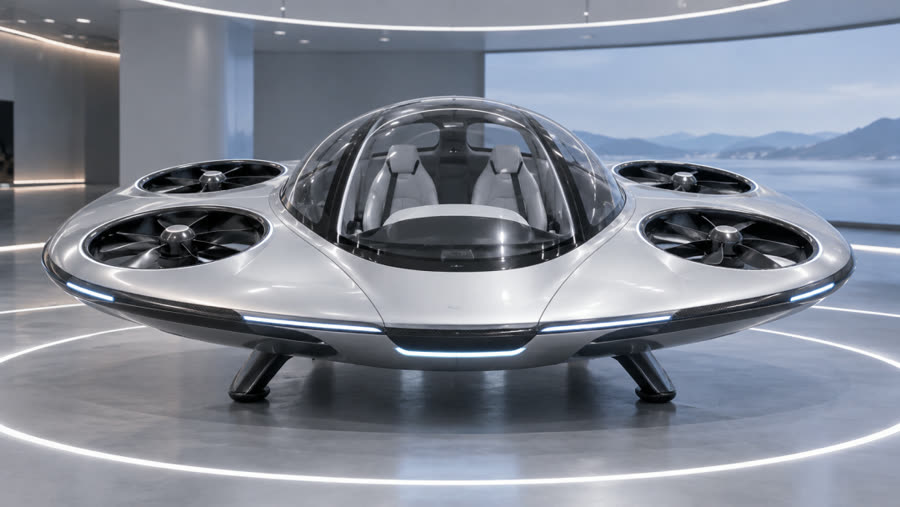
Imagem sem marca de um disco voador tripulado; criada com base em informações de produtos disponíveis publicamente; não é uma foto real do produto de nenhuma empresa específica.
Primeiro, o produto em si.
O site oficial da Zhihang o chama de "disco voador tripulado". Informações públicas mostram que ele pode transportar dois passageiros, com uma fuselagem em formato de disco e um cockpit esférico totalmente transparente. Seis hélices estão embutidas em dutos dentro do corpo, o que reduz as lâminas expostas e faz com que todo o veículo pareça ainda mais com os discos voadores vistos em filmes.
Ele não precisa de pista, decolando e pousando verticalmente; descrições públicas também mencionam decolagem e pouso em superfícies aquáticas, bem como voo autônomo. Tudo soa empolgante, mas seu trabalho não é substituir aviões — muito menos servir como transporte intermunicipal.
Os números fornecidos em relatórios públicos até agora: uma altitude máxima de voo de cerca de 30 metros e uma autonomia de cerca de 15 minutos, sendo os principais cenários o turismo em áreas cênicas, experiências de baixa altitude e apresentações de voo. Em outras palavras, é mais um dispositivo de diversão aérea que áreas cênicas podem comprar do que um carro voador particular.
Muitas pessoas que veem a etiqueta de preço de 800.000 RMB têm a mesma primeira reação: por esse preço, você poderia comprar um carro decente — então por que comprar um disco que só pode voar por 15 minutos?
Porque seus compradores provavelmente não são famílias comuns.
O que áreas cênicas, projetos de turismo cultural e empresas de apresentações de voo valorizam pode não ser o quão longe ele pode voar, mas se ele pode se tornar um projeto de experiência reconhecível. Um turista sentado dentro de um cockpit transparente a uma altura de dezenas de metros, apreciando a paisagem, é um argumento de venda completamente diferente de andar em um ônibus de turismo pelo parque.
Isso também explica por que a mesma empresa lançou uma versão de brinquedo com controle remoto por 268 RMB: um produto é responsável por atrair compradores e turistas, e o outro permite que mais pessoas levem um "disco voador" para casa. Não é surpresa que ele apareça em um showroom de Yiwu — Yiwu sempre foi boa em transformar produtos novos em mercadorias que podem ser exibidas, cotadas e comercializadas.
De acordo com relatos da mídia local de Yiwu, desde que a Zhihang UAV colocou o disco tripulado em exibição, ela tem recebido consultas de muitos visitantes de negócios todos os dias. A empresa também diz que assinou um contrato de pré-venda no valor de quase 120 milhões de RMB com uma empresa sediada em Hainan no ano passado. No entanto, tais informações refletem o interesse do mercado e leads de pedidos; não podem ser equiparadas diretamente a entregas concluídas, muito menos a uma rede operacional comercial estabelecida.
Aqui, vários conceitos precisam ser separados.
Tanto o site da empresa quanto os relatos da mídia mencionam que este disco obteve um Certificado Especial de Voo para Aeronaves Não Tripuladas Civis. Sob as regras publicamente disponíveis da Administração de Aviação Civil da China (CAAC), tal licença aborda voos realizados sob condições restritas para fins especificados — comumente voos de teste, demonstrações ou outros usos estipulados. Não é um passe que permite transportar passageiros livremente no momento em que você o obtém.
Portanto, entre "o certificado está em mãos" e "a área cênica pode começar a vender ingressos imediatamente", ainda existem locais de operação, gerenciamento de espaço aéreo, a entidade operadora, qualificações de pessoal, seguros e avaliações de segurança. Relatórios públicos não concluíram que este disco pode transportar diretamente passageiros pagantes em qualquer área cênica.
Os leitores comuns podem pensar desta forma: quando você vir "pode transportar pessoas", "tem um certificado" ou "tem pedidos", faça uma pergunta para cada um — quem está sendo transportado, onde ele voa, o que o certificado permite e os pedidos se transformaram em entregas?
O interessante aqui, na verdade, não é apenas o disco voador.
Yiwu já foi mais conhecida por pequenas mercadorias, mas está adicionando outra capacidade: trazer novos produtos para a frente dos compradores, rapidamente. Drones, robôs, eletrônicos de consumo e equipamentos de baixa altitude estão começando a aparecer no mesmo sistema de negociação que brinquedos e acessórios.
Deste ângulo, o aparecimento do disco no showroom de Yiwu mostra que os equipamentos de baixa altitude estão se movendo de laboratórios e eventos de lançamento para uma atividade de mercado mais concreta: alguém o exibe, alguém pergunta o preço, alguém discute a aquisição e os cenários operacionais.
Isso ainda está longe de uma "economia de baixa altitude madura", mas é um passo além de apenas lançar conceitos em eventos de lançamento. Somente quando os produtos estão dispostos a colocar um preço na mesa, os compradores estão dispostos a vir e olhar, e os operadores de áreas cênicas estão dispostos a discutir pedidos, o mercado tem a chance de continuar avançando.
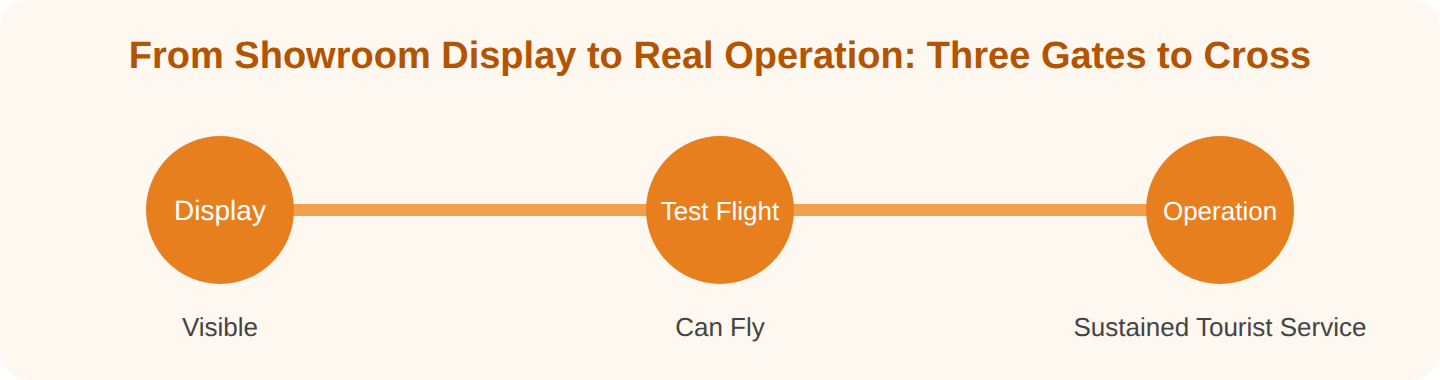
Da exibição em showroom à operação real: por quais estágios uma aeronave tripulada ainda deve passar?
O aparecimento do disco faz as pessoas se empolgarem facilmente, mas o que realmente determina até onde ele pode ir são as coisas que não são tão fáceis de transformar em vídeos curtos: se a estrutura pode permanecer consistente, se o cockpit transparente e os componentes dutados podem ser montados de forma confiável, como materiais mistos são unidos e reparados, e se as peças principais podem ser rapidamente substituídas e rastreadas quando problemas ocorrem.
Materiais públicos não divulgam qual equipamento de processamento este produto usa especificamente, e não há evidências de que ele adote a solução de corte a laser 3D de cinco eixos de nenhuma empresa em particular. Portanto, não pode ser escrito diretamente como um estudo de caso para qualquer equipamento específico.
Mas, de uma perspectiva de observação da indústria, há uma mudança muito clara com este tipo de produto: uma vez que o equipamento de baixa altitude se move de protótipos para áreas cênicas e para o mercado de compras, o padrão para avaliá-lo mudará gradualmente de "parece legal" para "pode voar com segurança, ser reparado de forma estável e ser operado continuamente".
A afirmação mais precisa agora é esta: um eVTOL tripulado está em exibição e à venda em Yiwu, com uma forma de produto claramente definida, um preço público e um posicionamento voltado para cenários de turismo cultural — e já atraiu a atenção dos compradores.
Mas não se pode tirar conclusões para toda a economia de baixa altitude. Se ele pode realmente voar em mais áreas cênicas, se os pedidos podem se transformar em entregas e quando os turistas podem comprar ingressos de experiência através de canais oficiais — tudo isso ainda precisa ser respondido por fatos posteriores.
O que Yiwu vende nunca foi meramente uma forma inovadora. É mais como um pequeno espelho: mostra-nos como um novo tipo de equipamento passa de "parecer muito futurista" para um mercado real "onde alguém está disposto a perguntar o preço". Se ele conseguirá voar mais longe no final, ainda depende de três coisas — produto, regulamentação e operações — conseguirem acompanhar ao mesmo tempo.
Nota da fonte: Este artigo foi compilado a partir de relatórios da mídia local de Yiwu, do site oficial da Shenzhen Zhihang UAV e de regras publicamente disponíveis da Administração de Aviação Civil da China (CAAC); preços, pedidos e alguns números de desempenho são declarados de acordo com relatórios públicos e descrições da empresa.
Por Lü Lu · HGTECH Laser Manufacturing Insights (Conta Oficial do WeChat) — artigo original em chinês. Compilado e traduzido por TROY Robotics.
eVTOL;
Drone;
VANT.
 2026-10-16 22:57:02
2026-10-16 20:38:21
2026-10-16 22:57:02
2026-10-16 20:38:21
TEL : + 86-4000988557;
Skype ID: gfreex@hotmail.com;
WeChat: STEP_ADTECH;
QQ ID: 8936906.
















continue lendo, mantenha-se informado, inscreva-se, e nós o convidamos a nos dizer o que você pensa.
 IPv6 rede suportada 粤ICP备2021036697号
 Serviço on-line
 4000988557
 sales1@troysupply.comsales2@troysupply.com
 Richard Liu
 TROY
TROY 8936906
 Troysupply_com
 português
 English
 français
 Deutsch
 русский
 español
 العربية
 日本語
日本語 한국의
한국의 Tiếng việt